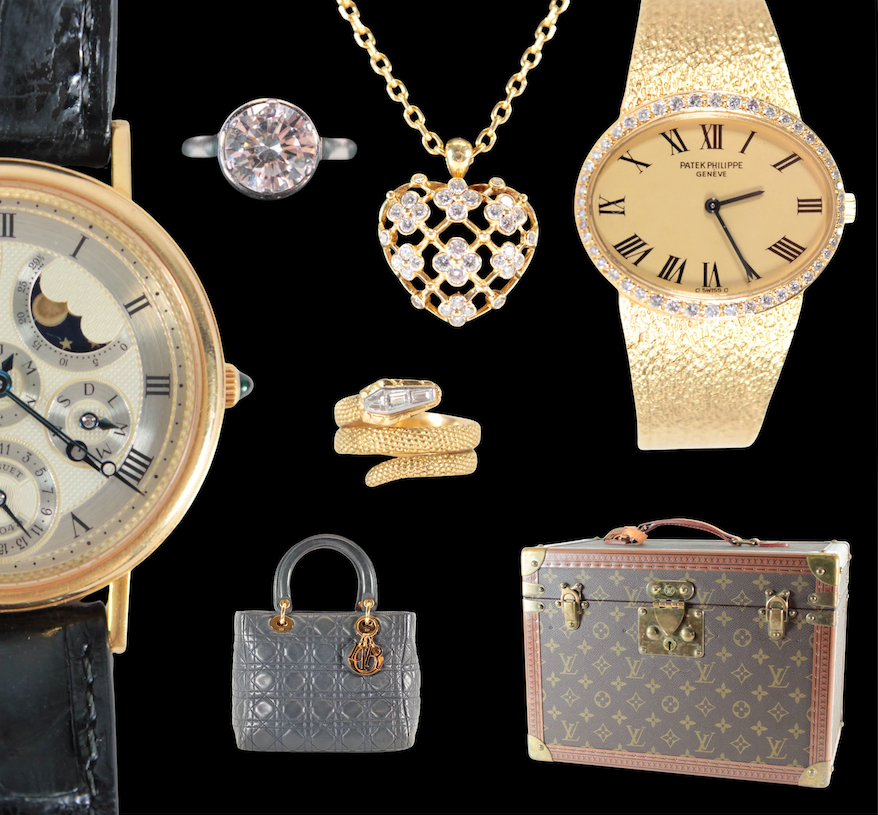
20231002173920.jpg)

BREGUET 3310: THE PERPETUAL CALENDAR AT SAINT PAUL
Abraham-Louis Breguet: The Origins of Modern Watchmaking
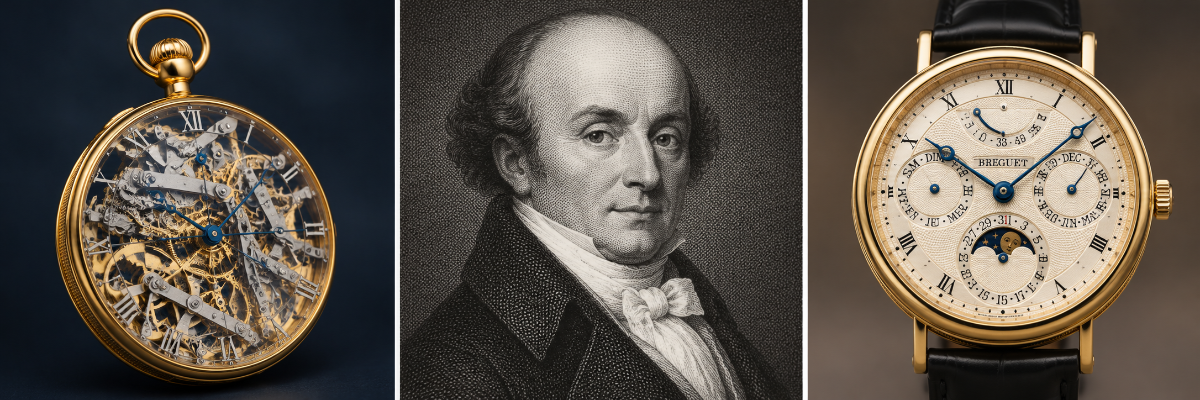
A pioneering figure in the history of watchmaking, Abraham-Louis Breguet (1747–1823) was responsible for numerous technical and aesthetic innovations that remain fundamental to the art of fine watchmaking today.
Born in Neuchâtel in 1747, he completed his apprenticeship in Versailles and Paris before establishing his own workshop in 1775 on the Quai de l’Horloge, on the Île de la Cité. The exceptional quality of his creations and his inventive genius soon earned him recognition among the great European courts. Marie Antoinette, Napoleon Bonaparte, Tsar Alexander I and Caroline Murat are among the distinguished historical figures associated with the Maison.
His research contributed to the refinement of self-winding watches, the development of mechanisms designed to protect movements against shocks and, most notably, the invention of the tourbillon, patented in 1801.
In 1783, Breguet received a particularly ambitious commission: to create a watch intended for Marie Antoinette, incorporating all the horological complications and technical innovations known at the time. This pocket watch, bearing the number 160, would not be completed until 1827, four years after its creator’s death.
Beyond his technical innovations, Abraham-Louis Breguet developed a distinctive aesthetic, characterised by understated cases, finely crafted dials and exceptional legibility. This pursuit of balance between mechanical complexity and formal elegance remains one of the defining characteristics of the Maison.
Breguet Reference 3310: Mastering Time
The Breguet reference 3310 wristwatch presented by Saint Paul Auction belongs to this distinguished tradition of complicated watchmaking.
Part of the Classique collection, this reference combines a self-winding mechanical movement with a perpetual calendar, moon-phase display and power reserve indicator. Its 18-carat yellow gold case houses a dial whose carefully considered layout reflects Breguet’s enduring commitment to legibility.
The perpetual calendar is among the most celebrated complications in fine watchmaking. Unlike a conventional calendar, its mechanism automatically accounts for the varying lengths of the months and the cycle of leap years, mechanically reproducing the complexities of the Gregorian calendar.
Provided the watch remains running and correctly set, this complication should require no calendar adjustment until March 2100, a centurial year that, exceptionally, will not be a leap year.
Complementing this mechanical sophistication is the moon-phase display, which reflects a longstanding horological tradition linking the measurement of time to the observation of astronomical cycles.
The power reserve indicator, displayed on a dedicated sector of the dial, allows the wearer to monitor the remaining running time of the movement.
The reference 3310 is documented with the 38-jewel automatic calibre 502. The integration of its various complications within a case measuring approximately 36 mm in diameter illustrates the refinement of this generation of Breguet wristwatches.
The example offered at auction is further distinguished by its original documentation. Purchased in 1991 from the jeweller Barichella in Nice, it is accompanied by its original presentation box, instruction manual and certificate, features particularly appreciated by collectors of fine watches.
|
The reference 3310 incorporates several of the distinctive aesthetic features developed by Abraham-Louis Breguet from the late eighteenth century onwards.
Among these are the celebrated Breguet hands, recognisable by their eccentric open-circle tips. Traditionally crafted from blued steel, they are distinguished by their slender proportions and exceptional legibility.
Engine-turned, or guilloché, dials also occupy a central place in the Maison’s identity. This decorative technique involves engraving intricate geometric patterns onto a metal surface. Beyond its ornamental qualities, it serves a practical purpose: distinguishing the various sections of the dial, reducing certain reflections and enhancing the readability of its indications.
The fluted caseband, minute track and Roman numerals contribute to this same pursuit of balance. Together, these elements form an instantly recognisable aesthetic language whose origins can be traced back to the Maison’s earliest pocket watches.
The reference 3310 belongs to a generation of complicated wristwatches produced towards the end of the twentieth century, particularly representative of the revival of mechanical watchmaking following the upheaval brought about by the advent of quartz technology.
At a time when precision could be achieved electronically, these creations reaffirmed the enduring value of mechanical craftsmanship, miniaturisation and traditional decorative arts.
When studying and assessing collectible Breguet watches, the identification of the reference, the consistency of the movement and dial, the condition of the watch and the presence of original documentation are all essential considerations in understanding each individual example.
The presentation of this Breguet reference 3310 at auction in Saint-Paul-de-Vence offers an opportunity to rediscover a vision of fine watchmaking in which mechanical mastery remains inseparable from elegance.
Jewellery, Watches and Fashion Auction
Saturday, 5 December 2026 — 2:00 PM
Saint Paul Auction — Saint-Paul-de-Vence, French Riviera.
Live auction with online bidding available through LIVES
Explore the auction catalogue
|